4.6
4.6



 Historia
  Agenda


 Librerías


 Inicio


Detalles del libro
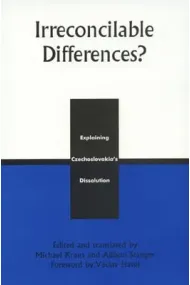
Review Why did the dismemberment of Czechoslovakia occur and how did it take place without violence? With an approach that is at once imaginative, comprehensive, and effective, Kraus and Stanger juxtapose explanations advanced by several scholars with the insider views offered by leading political figures?both Czech and Slovak?who participated in the process. The resulting tour de force represents indispensable reading for all who are interested in the comparative study of nationalism and separatism. -- Walker Connor, Trinity College, HartfordAmidst an avalanche of books on the violent breakup of Yugoslavia, this is the first comprehensive study of the peaceful divorce of Czechoslovakia. It provides a rare combination of perspectives from both sides of the divide and puts them in a broader comparative framework. Neither a lament on how Czechoslovakia could have been 'saved' nor, making virtue out of necessity, the discovery of a 'model' for future candidates for 'separation with a human face' in Canada or Belgium, this work provides a clear, informed, and thoughtful assessment of the dissolution of a European state. -- Jacques Rupnik, Foundation Nationale des Sciences PolitiquesThis book has the merit of being the most comprehensive discussion of Czechoslovakia's fate. Therefore this volume should be of interest to those who wish to move beyond the surface of the phenomenon. ? MillenniumThe contributors make the debates comprehensible and accessible. The editors' excellent introduction not only contextualizes the issues in the split, but also gives unity to the many chapters. The utility of this book naturally extends far beyond the study of former Czechoslovakia to the general and vexing phenomenon of nationalism and ethnic conflict resolution. ? International AffairsA richly textured contribution to our understanding of one of the milestones in Slovak-Czech relations and one of the hallmarks of the 1990s in east central Europe. Much of the analysis is of an extremely high quality, the contributors are among the top experts on the issue, and a diversity of viewpoints is presented. I highly recommend this book to anyone interested in Czech, Slovak, or Czechoslovak history, in eastern Europe's transition in the 1990s, and in the thorny problems of interethnic relations, of which those of the Czechs and Slovaks, on account of their peaceful divorce, are unique. ? Slavic ReviewExcellent. . . . A significant contribution to the literature on transition and on the disintegration of states in the contemporary world. -- Gordon Skilling, University of TorontoThis is an excellent book. ? Democratization Product Description This unique volume brings together a multi-disciplinary group of scholars as well as Czech and Slovak decisionmakers who were personally involved in the events leading up to the separation of Czechoslovakia. Asking whether the dissolution was inevitable, the contributors bring a range of different approaches and perspectives to bear on the twin problems of democratic transitions in multinational societies and ethnic separatism and its origins. The blend of analysis and insider experiences will make this book invaluable for all concerned with nationalism and ethnicity, democratization, and transitions in Eastern Europe. About the Author Michael Kraus is professor and chair of the Department of Political Science, Middlebury College. Allison Stanger is associate professor of political science and director of the international politics and economics program, Middlebury College.
Leer más - ISBN13 9780847690206
- ISBN10 0847690202
- Páginas 384
- Año de Edición 2000
- Fecha de publicación 01/07/2000
- Idioma Alemán, Francés
Reseñas y valoraciones
¡Sé la primera persona en valorarlo!
¿Has leído Irreconcilable Differences?: Explaining Czechoslovakia's Dissolution?



Irreconcilable Differences?: Explaining Czechoslovakia's Dissolution (Alemán, Francés)
- De
- 9780847690206
172,90€
182,00€
-5%
Envío Gratis
No disponible
172,90€
182,00€
-5%
Envío Gratis
No disponible


Devolución gratis

 ¡Gracias por comprar en librerías reales!
 Whatsapp
 Facebook
 Linkedin
 X
X